
AAV Drones
Autonomous Aerial Vehicles
Autonomous aerial vehicles fly the mission themselves. Onboard autonomy handles navigation, obstacle avoidance, and mission execution while operators supervise from the ground. From autonomous cargo and resupply drones to heavy-lift multirotors and persistent ISR platforms, we build the flight-grade polymer hardware that lets AAV airframes iterate as fast as their autonomy software does.
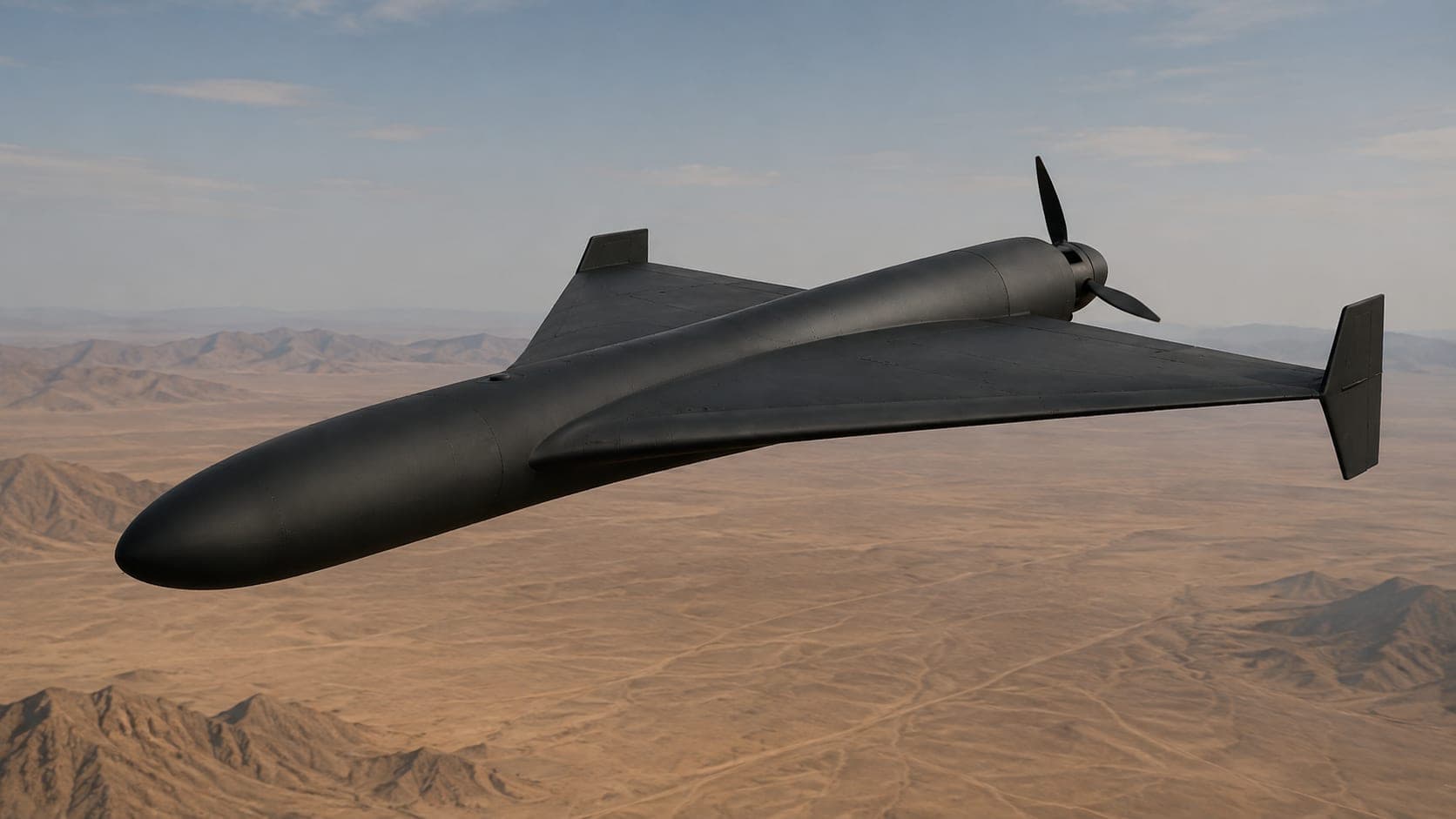
AAVs are a distinct subset of UAS. Where a traditional drone has a pilot flying every input from a ground station, an autonomous aerial vehicle carries its decision-making onboard. The class spans autonomous logistics and cargo delivery aircraft, shipboard and expeditionary resupply drones, heavy-lift multirotors, and long-dwell autonomous ISR platforms. Most are electric or hybrid-electric, most are rotor-borne, and nearly all are built in higher quantities and revised more often than any traditional aircraft program.
That production profile is exactly where additive manufacturing wins. There is no tooling to amortize and no tooling to scrap when the design changes, so an airframe revision costs a CAD update, not a retooling cycle. Weight saved anywhere on a battery-powered aircraft converts directly into payload or endurance, and additive lets us consolidate brackets, fairings, and routing features into single lightweight parts that machining and molding cannot match.
We support AAV programs from first prototype through serial production under one AS9100D-controlled roof: carbon-filled nylons for stiffness-to-weight, ESD-safe Antero for electronics protection, flexible TPU for seals and vibration isolation, and flame-retardant Ultem where certification demands it.
Hardware we build for this platform.
Motor mounts, motor housings, cooling shrouds, and coil cover filters engineered for electric powertrains, with one optimized part for every motor position on the aircraft.
Battery pack and ESC cooling ducts, flush NACA inlets, and duct adaptors that route cooling air through dense internal volumes no molded duct could reach.
ESD-safe RF shielding, antenna buckets, and antenna covers protecting the GNSS, datalink, and detect-and-avoid sensors the autonomy stack depends on.
Fastener covers, arm fairings, lower coverings, and quick-access side panels that clean up airflow and protect systems from rotor wash, debris, and weather.
Where additive earns its place on the airframe.
Motor and Filtration
Motor components
Electric propulsion defines the AAV. We print motor mounts, motor housings, spinner cones, and cooling shrouds for outrunner and inrunner motors, tuned per motor position without tooling. Design consolidation is the advantage: a single printed part can combine the mount, the fairing, and the wire routing path, cutting part count, fastener count, and assembly time on aircraft built by the hundreds. Carbon-filled Nylon 12CF delivers the stiffness-to-weight these mounts demand.
Coil cover series and coil cover filters (air ingress protection)
Open-stator motors need cooling airflow to survive, but that same opening ingests the dust, sand, and debris that ends motors early. For AAVs operating from unimproved sites, ship decks, and austere environments, stator ingress is a first-order reliability problem. Our coil covers integrate filter media retention and engineered airflow paths into a single printed part, protecting the windings while preserving the cooling the motor was designed around. SLS builds the fine mesh and lattice features these parts require, and the series scales across motor diameters as a family of catalog parts.
Coverings and Fairings
Fastener covers
On a battery aircraft, every count of drag is endurance left on the table. Printed fastener covers clean up exposed hardware on rotor arms, booms, and fuselage joints, smoothing airflow at negligible weight and cost.
Forward lower coverings
The underside of an AAV takes the abuse: rotor wash, kicked-up debris, weather, and ground handling. Forward lower coverings shield the battery bay, power distribution board, and harness runs, and are printed with the mounting bosses and drainage features designed in.
Right-hand side panels
Battery swap and avionics service drive AAV turnaround time. Printed side panels give crews tool-free access to the systems they touch most, with latching features, stiffening ribs, and harness clearances built into the part rather than added to it.
Ducting
NACA ducts
Flush NACA inlets bring cooling air aboard with minimal drag penalty. On an AAV they feed the battery pack and ESC bays, where thermal margin is the life limit of the powertrain.
Duct adaptors
Printed duct adaptors join custom ducting runs to off-the-shelf fans, blowers, and heat exchangers. Complex transitions that would be unbuildable as molded parts, or uneconomical at AAV volumes, print as single pieces.
Electronics and RF
RF shielding components
Electric aircraft are electromagnetically noisy. High-current ESCs and power distribution switch hard, inches from the GNSS receivers, C2 radios, and detect-and-avoid sensors the autonomy stack cannot fly without. We print RF shielding components in ESD-safe Antero 840CN03 that isolate sensitive electronics from powertrain noise while adding grams, not ounces.
Antenna buckets
Recessed antenna buckets mount C2 datalink, GNSS and RTK, and ADS-B antennas below the mold line, protecting them from rotor wash and handling damage while keeping cable runs short and serviceable.
Antenna covers
RF-transparent printed covers protect exposed antennas without attenuating the signal, with material selection driven by frequency, UV exposure, and environmental sealing requirements.
Structural and Fuel Systems
Rear fuel floor (hybrid-electric platforms)
Range-extended and hybrid-electric AAVs carry fuel, and fuel compartments need chemically resistant floors and liners. We produce sealed fuel compartment components for hybrid powertrains in fuel-compatible, flame-retardant polymers. For long-endurance fueled platforms, see our RPA page, where fuel system components are covered in depth.
The capabilities behind your program.
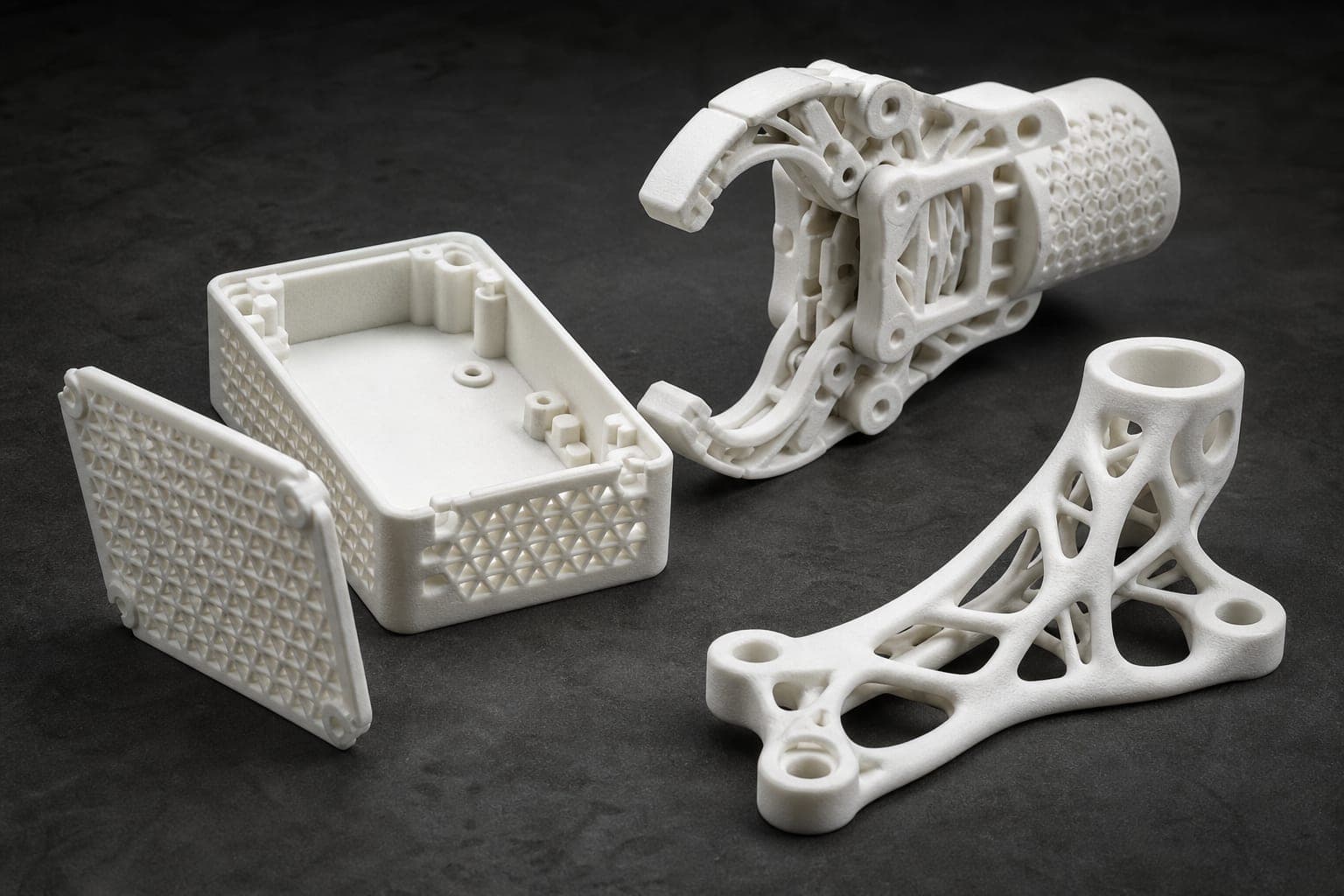
Tough nylon and elastomer parts for production enclosures, complex geometries, and end-of-arm tooling, printed without support structures.
Explore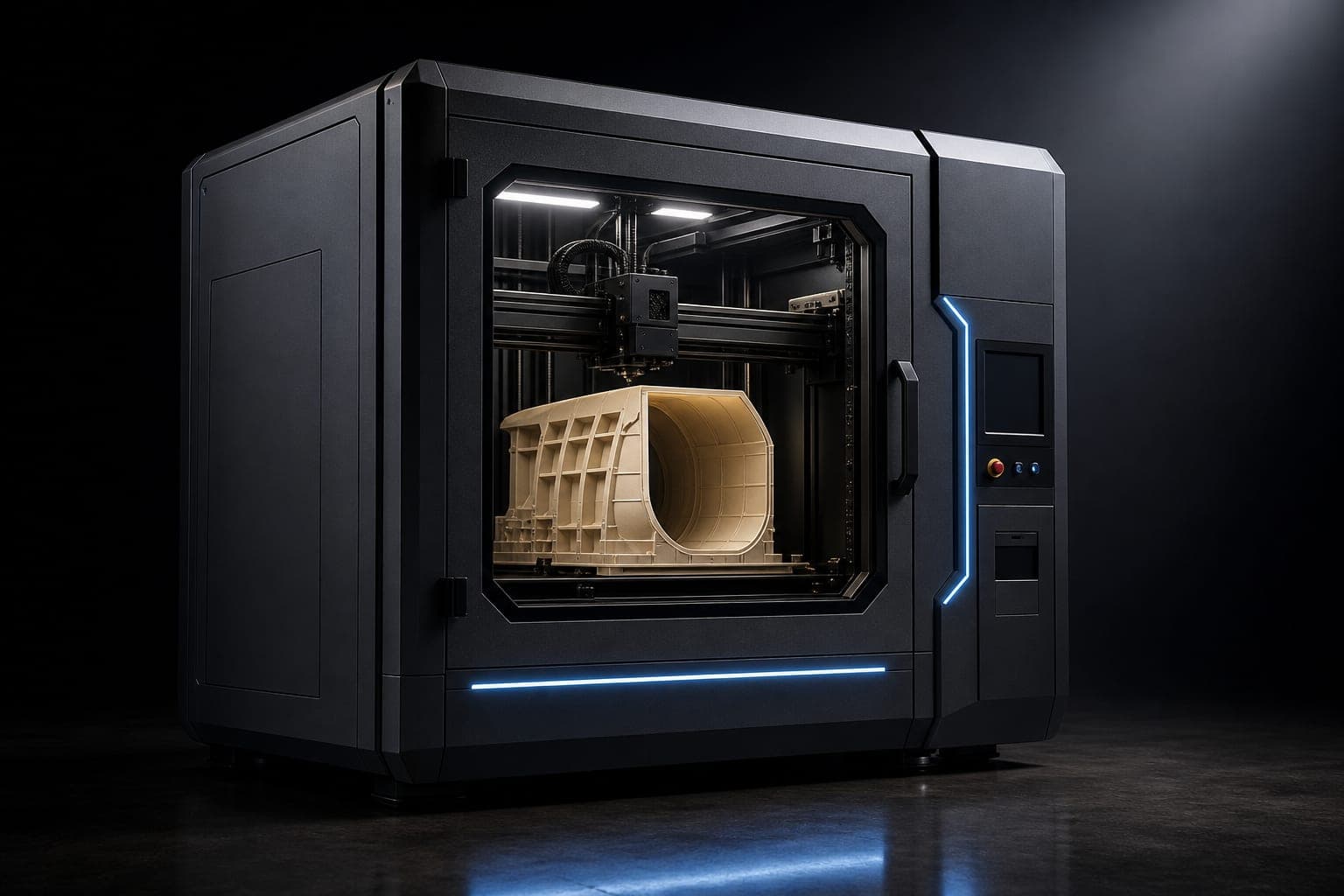
High-performance thermoplastic parts in Ultem, PEEK, and Antero on production-grade Stratasys systems.
Explore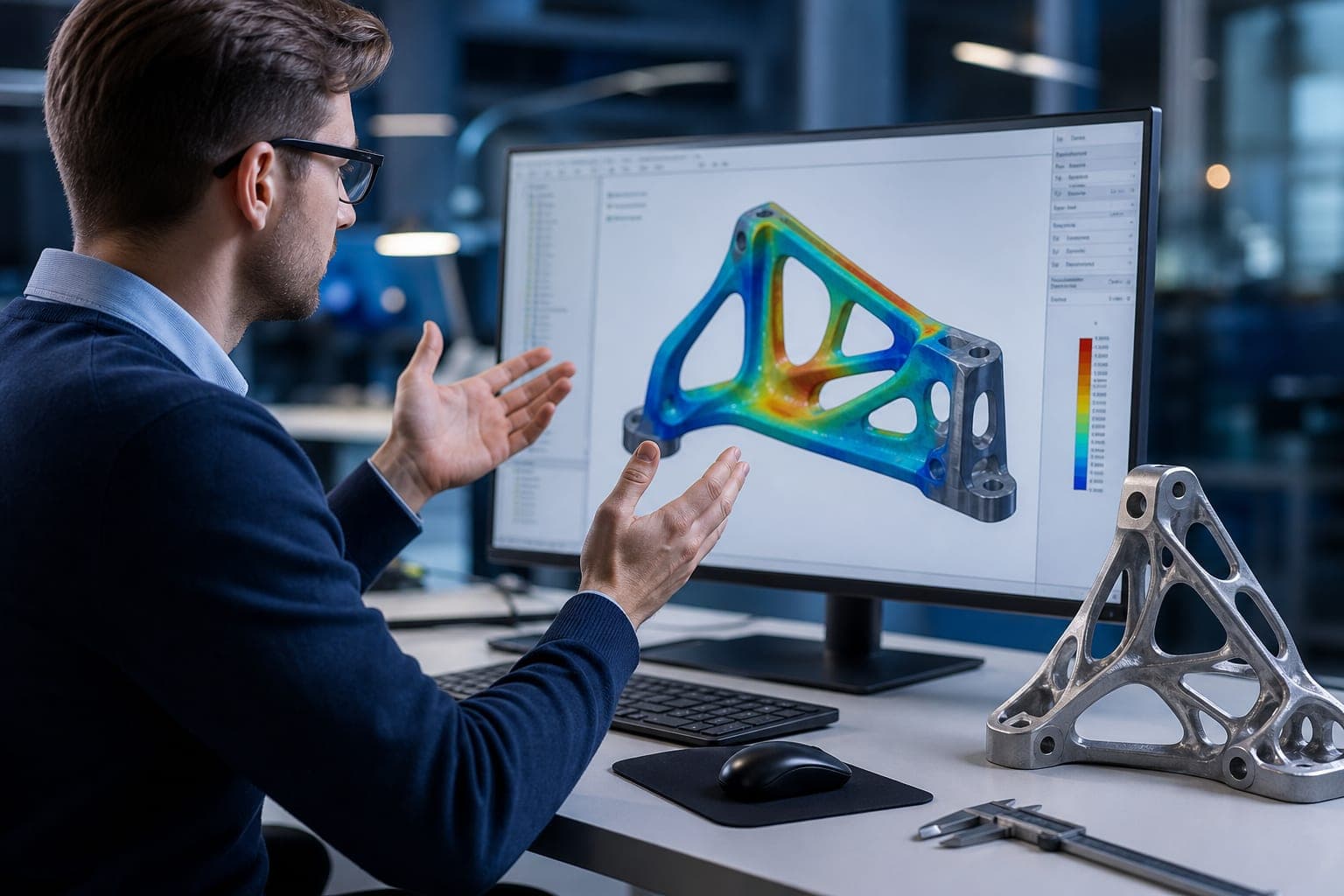
End-to-end engineering support: meaningful customer interaction, DFAM, topology optimization, laser scanning, and obsolete-part replication.
ExploreValidated aerospace-grade materials.
Carbon-fiber reinforced nylon: the highest flexural strength of any FDM 3D printing material.
Carbon-nanotube reinforced PEKK with intrinsic ESD performance, engineered for mission-critical electronics.
Thermoplastic polyurethane for flexible elastomer parts with stretch, abrasion, and tear resistance.
The aerospace cabin standard: FAR 25.853 / OSU 65-65 compliant.
Other platform classes we serve.
Jet-powered, semi-autonomous uncrewed fighters teaming with crewed aircraft, built for affordable mass.
Group 4 and 5 aircraft that cruise at medium altitude for a day or more: persistent ISR, strike, and communications relay.
Low-cost uncrewed aircraft built in large numbers on a common core, with swappable wings, propulsion, and payloads.
Long-endurance, satellite-linked ISR and strike aircraft flown by pilots from ground stations.
Lightweight structures and payload housings for U.S. military UAS Group 2–5 platforms.
Building an autonomous aircraft?
Let’s build hardware.
Send us your drawings and your program timeline. Our engineers will quote rapidly and deliver flight-ready parts from first prototype through serial production.