CCA Drones
Collaborative Combat Aircraft
Collaborative Combat Aircraft are jet-powered, semi-autonomous uncrewed fighters built to fly alongside crewed aircraft. The concept only works at scale, and scale demands a supply chain that can deliver flight-grade hardware at rates and unit costs traditional fighter programs never hit. That is what tooling-free additive production was built for.
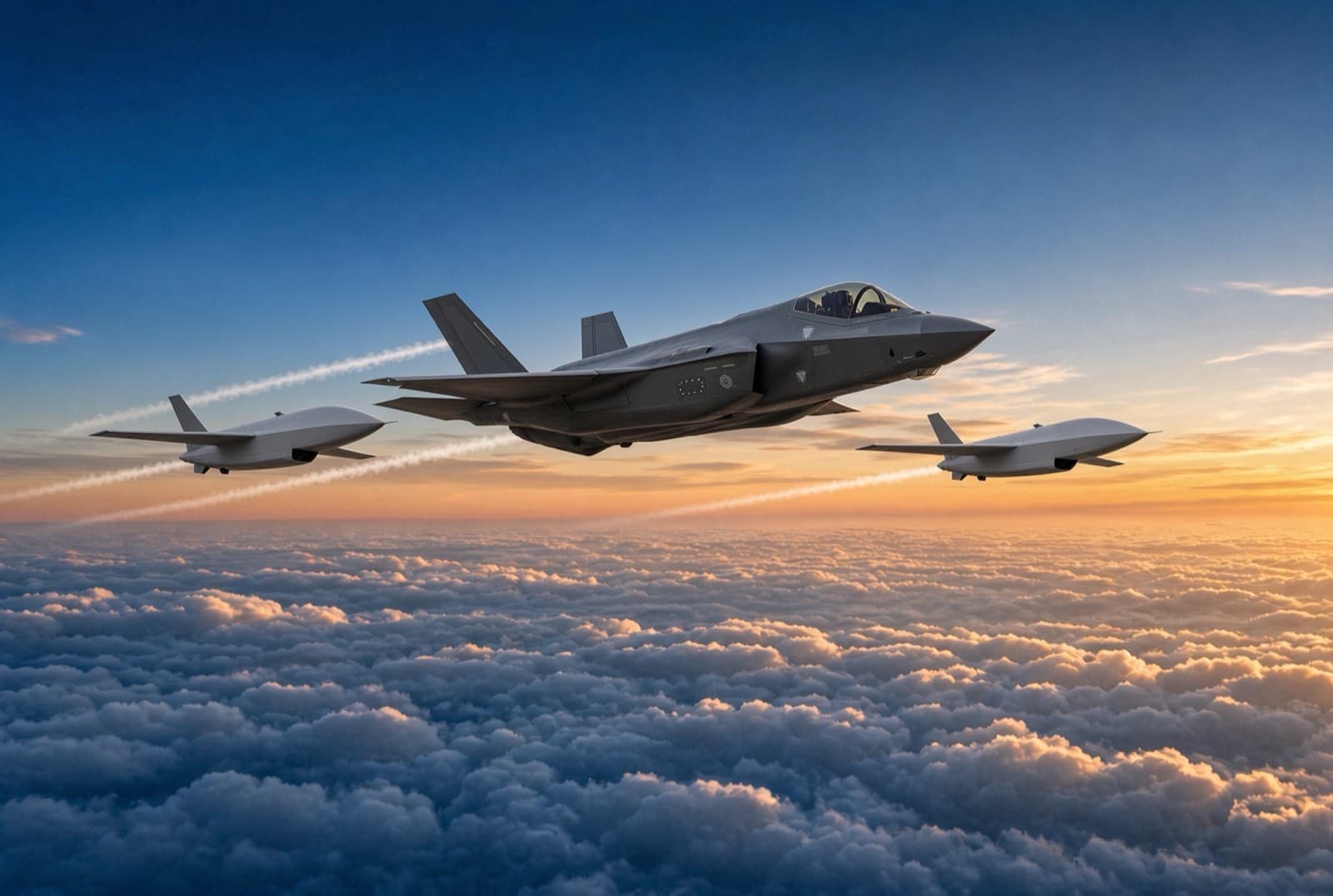
CCAs are the fastest-moving segment of military aviation. The first increment of aircraft has advanced from contract award to first flight to production decisions in under three years, follow-on increments are widening the industrial base, and planned fleets number in the hundreds this decade across multiple services. The premise behind the program is affordable mass: fielding capable uncrewed fighters in quantities that change the combat math.
Affordable mass needs an affordable supply chain. Every injection mold, layup tool, and casting die adds cost and schedule that these programs are designed to avoid. Additive manufacturing produces secondary structure, ducting, and systems hardware with no tooling at all, absorbs design revisions in CAD, and scales from qualification units to rate production on the same machines with the same process documentation.
We produce CCA-class hardware under AS9100D process control in an ITAR-registered, CMMC Level II self-certified facility, with DLA registration and full lot traceability. Our Stratasys F900 cell is qualified for Antero 800NA, ESD-safe Antero 840CN03, Ultem 9085 Certified Grade, and Victrex AM 200 PAEK: the high-temperature, chemical-resistant, electrostatically safe materials this aircraft class runs on.
Hardware we build for this platform.
Flush NACA inlets and duct adaptors feeding cooling air to the mission systems and autonomy computing that fill a CCA airframe.
ESD-safe RF shielding, antenna buckets, and RF-transparent covers for aircraft whose entire concept of operations depends on resilient connectivity.
Rear fuel floors, liners, and closeouts in high-temperature, fuel-compatible polymers, sealed and bonded in-house.
Fastener covers, lower coverings, and bay access panels that hold outer mold line smoothness at production rate without tooling.
Where additive earns its place on the airframe.
Ducting
NACA ducts
A CCA is dense with mission systems, sensors, and autonomy computing, and it has no crew environmental system to tap for cooling. Dedicated cooling air paths run throughout these airframes. Printed NACA ducts integrate the flush inlet, the diffuser geometry, and the mounting flange into a single part, delivering low-drag cooling air to avionics and equipment bays without the tooling cost of a formed or molded duct.
Duct adaptors
Between the inlet and the equipment sits program-specific plumbing: transitions to trunk lines, take-offs to cold plates, and joints between printed runs and off-the-shelf components. These adaptors are complex, low-volume, and revised often. There is no business case for tooling them at CCA quantities, and every reason to print them.
Coverings and Fairings
Fastener covers
Surface continuity matters twice on a survivable uncrewed fighter: once for drag, and once for signature. Printed fastener covers maintain outer mold line smoothness over exposed hardware, produced on demand in the quantities a rate line consumes.
Forward lower coverings
CCA basing concepts emphasize dispersed operations from austere fields, and the underside of the aircraft carries the risk. Forward lower coverings protect harness runs, plumbing, and gear bay edges from foreign object debris and ground handling, and print with stiffeners and mounting provisions consolidated into the part.
Right-hand side panels
Asymmetric, single-side parts are the classic additive use case. A right-hand avionics bay panel has no left-hand twin to share tooling with. We print side panels and access covers to the current revision with no tooling to modify, which matters on airframes still evolving between production lots.
Structural and Fuel Systems
Rear fuel floor
Combat radius means internal fuel, and internal fuel volumes need compartment floors, liners, and closeouts. We build these in high-temperature, chemically resistant polymers, including Antero PEKK and Ultem, with sealing and bonding performed in-house under the same AS9100D controls as the build itself.
Electronics and RF
RF shielding components
CCAs are designed to operate in deliberately contested electromagnetic environments while carrying mission computers, autonomy processing, and electronic warfare payloads within inches of each other. We print EMI shielding components in ESD-safe Antero 840CN03, a carbon nanotube-filled PEKK that few facilities are qualified to run, providing electrostatic protection and shielding geometry in a flight-weight polymer.
Antenna buckets
Datalink, navigation, and identification antennas integrate conformally on this aircraft class to keep the mold line clean. Printed antenna buckets form the recessed cavities and mounting substructure for each installation, with drainage, sealing lands, and harness routing designed into the part.
Antenna covers
A CCA that loses its link to its crewed teammate loses its mission. RF-transparent printed covers protect the datalink and navigation antennas that connectivity depends on, with materials selected for transparency at the operating frequency and durability at jet speeds.
Motor and Filtration
Actuation and subsystem motors
CCAs are turbine-powered, so motor hardware on this platform means actuation, not propulsion: housings, covers, and ingress protection for control surface actuators, gear and door actuators, and fuel system pump motors. Where an electric subsystem motor needs cooling airflow and debris protection, our coil cover filter approach applies at subsystem scale.
The capabilities behind your program.
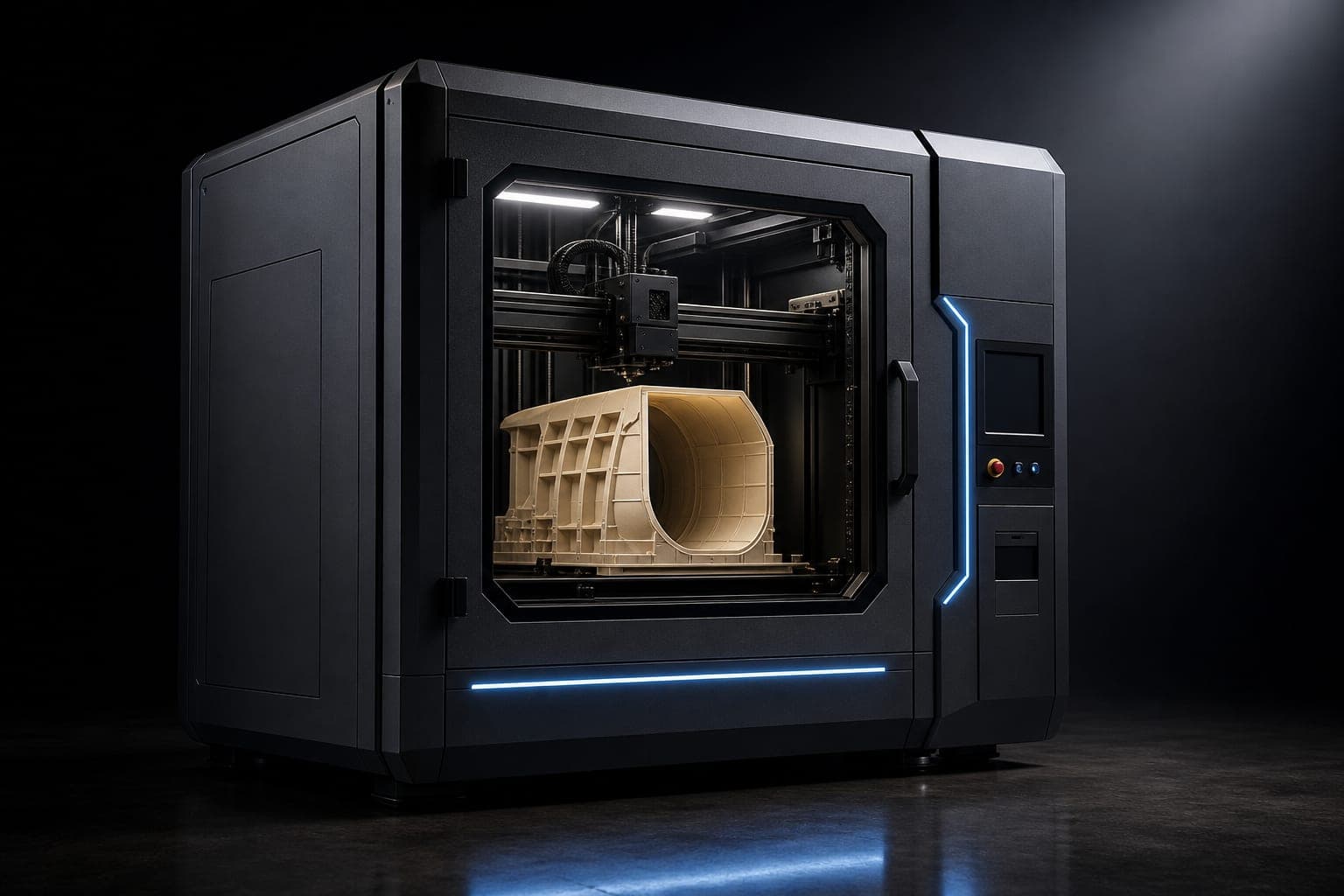
High-performance thermoplastic parts in Ultem, PEEK, and Antero on production-grade Stratasys systems.
Explore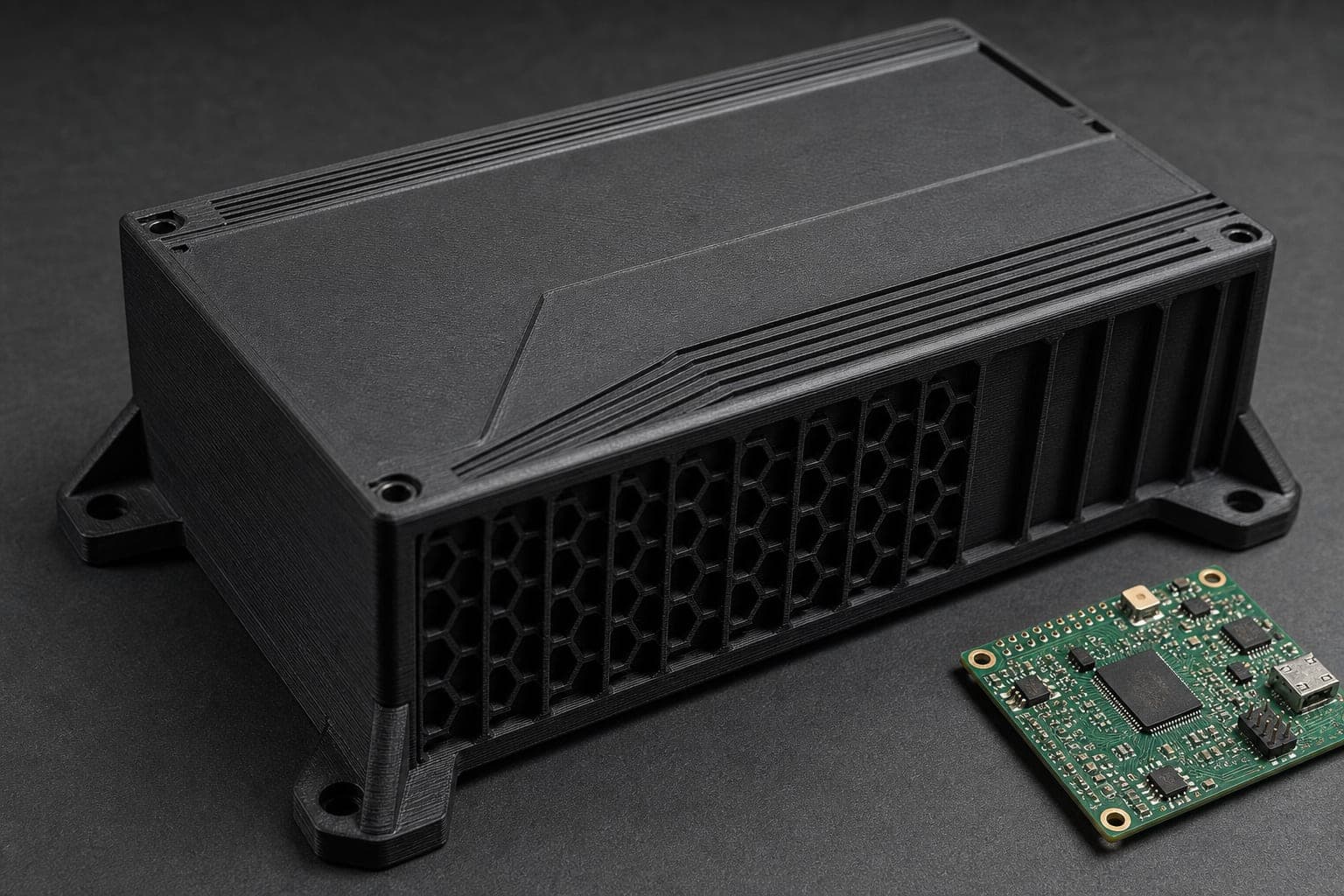
ESD-safe enclosures, RF-transparent housings, and vibration-isolated mounts for avionics, radar, sensors, and radiation-sensitive electronics across commercial, military, and space platforms.
Explore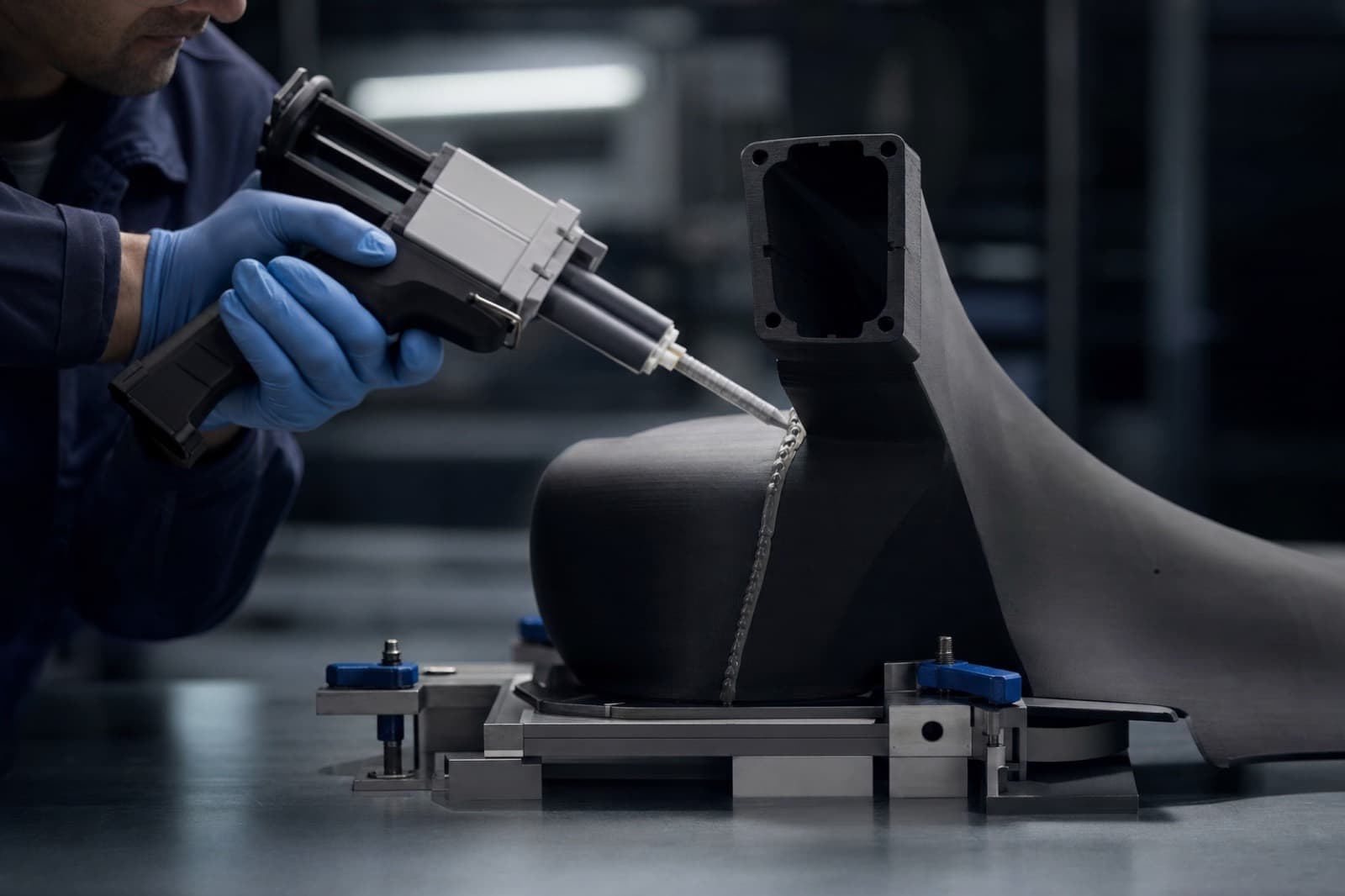
Aerospace-spec structural adhesives, weatherproof seals, and post-print porosity sealing, extending performance into demanding service environments.
ExploreValidated aerospace-grade materials.
PEKK-based thermoplastic for avionics, low-outgassing space hardware, and high-chemical-resistance applications.
Carbon-nanotube reinforced PEKK with intrinsic ESD performance, engineered for mission-critical electronics.
The aerospace cabin standard: FAR 25.853 / OSU 65-65 compliant.
High-performance PAEK (PEEK-family) formulated for additive: thermal-critical hardware up to 300°F continuous use.
Other platform classes we serve.
Electric and hybrid-electric aircraft that fly the mission with onboard autonomy: cargo, resupply, heavy-lift, and persistent ISR.
Group 4 and 5 aircraft that cruise at medium altitude for a day or more: persistent ISR, strike, and communications relay.
Low-cost uncrewed aircraft built in large numbers on a common core, with swappable wings, propulsion, and payloads.
Long-endurance, satellite-linked ISR and strike aircraft flown by pilots from ground stations.
Lightweight structures and payload housings for U.S. military UAS Group 2–5 platforms.
Qualifying suppliers for a CCA program?
Let’s build hardware.
We are AS9100D certified, ITAR registered, and CMMC Level II self-certified, with qualified high-performance materials and rate capacity on production FDM. Send us your part list and your schedule.