
MALE Drones
Medium-Altitude, Long-Endurance
MALE aircraft trade speed for time on station. High-aspect-ratio wings, efficient piston, heavy-fuel, or turboprop engines, and large fuel fractions keep them aloft for a day or more. Every pound of structure and every count of drag comes out of loiter time, and every hour aloft is an hour of cold soak, UV, and vibration on the parts we build.
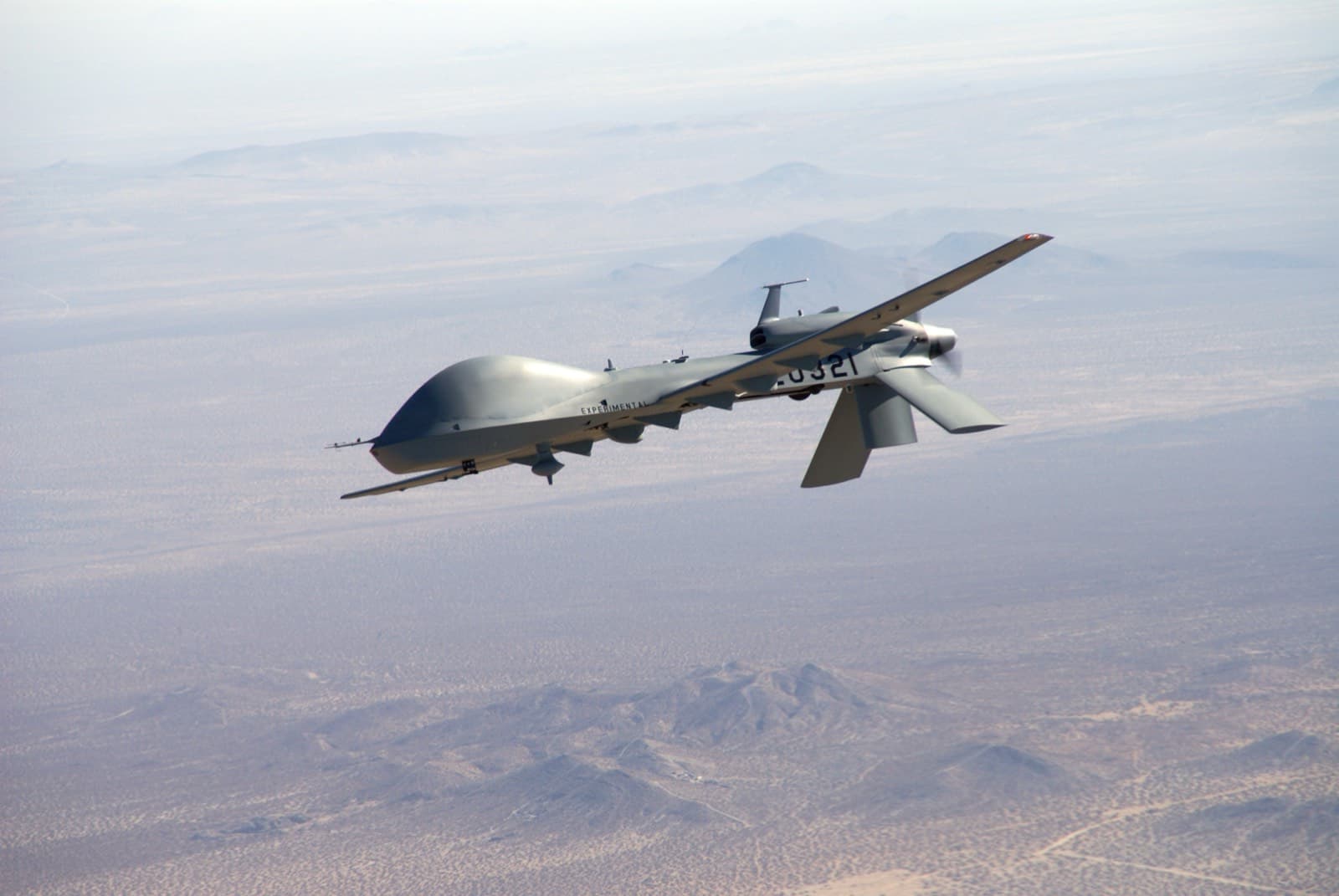
Medium-altitude, long-endurance UAVs are the workhorses of persistent ISR. They typically operate between 10,000 and 30,000 feet, stay aloft for 24 hours or more, and sit in UAS Groups 4 and 5. The class includes long-serving U.S. platforms like the MQ-9 Reaper and MQ-1C Gray Eagle alongside a growing field of newer designs. Most MALE aircraft in U.S. service are also remotely piloted, so this page focuses on the airframe and its flight envelope, while our RPA page covers fleet sustainment.
Endurance is the design driver, and it is unforgiving. An aircraft built to loiter for a day is optimized around fuel fraction, lift-to-drag ratio, and structural weight, so a fairing that saves a few ounces or a duct that trims a little drag pays back across thousands of flight hours. Additive manufacturing consolidates brackets and fairings into lighter single parts, shapes ducts to the airflow rather than to a mold, and produces the low-volume part numbers these programs run on without tooling.
The medium-altitude environment shapes material choice. Parts cold soak for hours at altitude, heat up on the ramp, and absorb UV and engine vibration through long sorties. We build MALE hardware in Ultem 9085, Antero 800NA, and ESD-safe Antero 840CN03 on production FDM under AS9100D control, in an ITAR-registered, CMMC Level II self-certified facility.
Hardware we build for this platform.
Wing-root, tail, landing gear, and sensor fairings that trim drag on aircraft where drag is loiter time.
Cooling inlets, NACA ducts, and duct adaptors for piston, heavy-fuel, and turboprop engines and the avionics bays behind them.
Pod structures, mounting frames, and tail cones for EO/IR, radar, and SIGINT payloads that change with every mission fit.
Antenna buckets, RF-transparent covers, and shielding for the beyond-line-of-sight links that make long endurance usable.
Sensor, avionics, and harness brackets, plus cable coverings and raceways that protect wiring runs through long sorties.
ESD-safe housings for mission computers and radios, and static-dissipative guides for the fiber optic lines that connect them.
Where additive earns its place on the airframe.
Coverings and Fairings
Wing, tail, and landing gear fairings
High-aspect-ratio wings, tail surfaces, and landing gear create interference drag at every junction with the fuselage. Printed wing-root, tail-root, and gear fairings smooth those junctions with compound curves built directly from the aerodynamic surface, with no layup tooling to make or modify when the shape changes.
Fastener covers and access panels
On a 24-hour aircraft, small drag sources add up to hours of loiter. Printed fastener covers and flush access panels clean up exposed hardware and give crews quick access to the systems they service between sorties.
Ducting
Engine cooling inlets and NACA ducts
MALE engines need steady cooling air through climb, loiter, and descent, and slow loiter speeds leave little ram pressure to drive it, so inlet design matters. Printed NACA ducts and cooling inlets integrate the flush inlet, diffuser, and mounting flange into one part, with heat-resistant Antero 800NA and Ultem 9085 for the zones around the engine bay.
Duct adaptors and avionics cooling
Mission systems have grown faster than the airframes that carry them. Printed duct adaptors route cooling air from inlets to avionics and payload bays through a crowded fuselage, joining printed runs to off-the-shelf fans and heat exchangers.
Payload Integration
Sensor pod structures
MALE aircraft earn their keep carrying sensors: EO/IR turrets, synthetic aperture radar, and signals intelligence pods under the wings and fuselage. We print pod structures, internal mounting frames, and aerodynamic tail cones sized to each payload, so a new mission fit does not wait on a new mold.
Payload mounting hardware
Brackets, trays, and harness routing inside payload bays print with features consolidated and threaded inserts installed in-house, cutting part count on the installations that change most often.
Electronics and RF
SATCOM antenna hardware
Endurance only matters if the aircraft stays connected past the horizon. Printed antenna buckets and mounting substructure hold SATCOM, line-of-sight datalink, and GPS antennas, with drainage paths and sealing lands designed into the part.
Antenna covers and RF shielding
RF-transparent covers protect exposed antennas through thousands of hours of UV and rain. ESD-safe Antero 840CN03 shielding keeps payload electronics from interfering with the flight-critical receivers mounted beside them.
Brackets, Enclosures, and Cable Management
Mounting brackets
A MALE fuselage is lined with brackets: sensor mounts, avionics tray supports, antenna standoffs, and clamps for plumbing and harness runs, most of them low-volume part numbers unique to one station on the aircraft. We print them in Nylon 12CF where stiffness-to-weight matters and in Ultem 9085 where flammability requirements apply, consolidating the bracket, the standoff, and the clamp into a single part with threaded inserts installed in-house.
Cable coverings and harness routing
Harness runs on a long-endurance aircraft carry power, data, and control signals the length of the fuselage and out to the wings, through thousands of hours of vibration and thermal cycling. Printed cable coverings, raceways, and harness guides protect those runs, hold spacing from structure and heat sources, and follow the airframe contour without the tooling a formed cover would need.
Fiber optic guides
Fiber optic lines for sensors and data links need routing hardware with generous bend radii, smooth surfaces, and no charge build-up near the optics. We produce thin-walled, static-dissipative fiber optic guides in ESD-safe materials, a part family we have built in production runs above 2,000 units for an aircraft program.
Electronics enclosures
Mission computers, datalink radios, and payload controllers ride inside enclosures that must protect against static discharge, hold alignment through vibration, and stay light. We print electronics enclosures and avionics housings in intrinsically ESD-safe Antero 840CN03 and flame-retardant Ultem 9085, with cooling paths, connector cutouts, and mounting features designed into the housing.
Structural and Fuel Systems
Fuel compartment components
Fuel is the largest internal volume on a MALE aircraft. We build rear fuel floors, compartment liners, and closeouts in flame-retardant Ultem 9085, with sealing and bonding performed in-house. For fielded fleets that need reverse-engineered replacements, see our RPA page.
The capabilities behind your program.
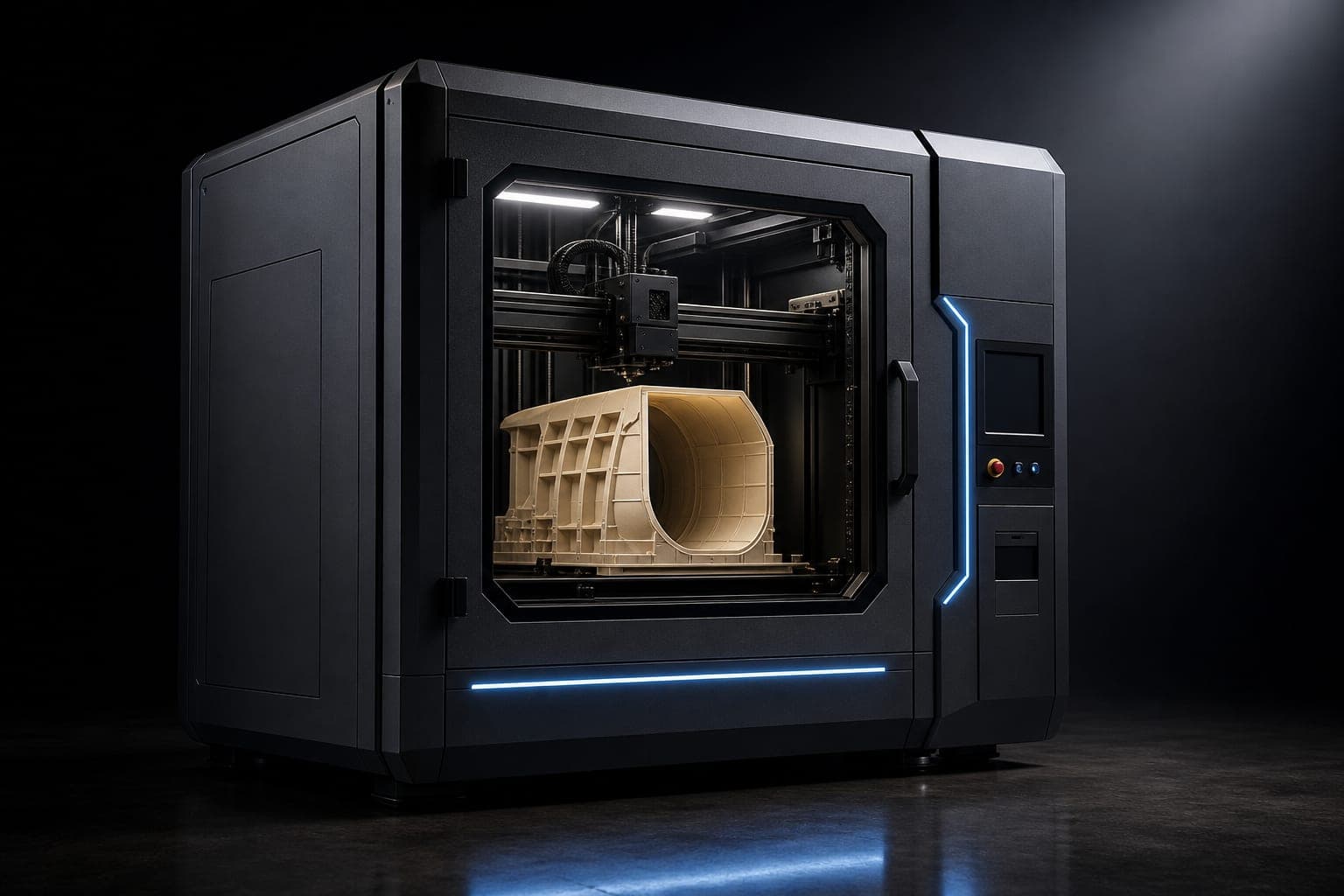
High-performance thermoplastic parts in Ultem, PEEK, and Antero on production-grade Stratasys systems.
Explore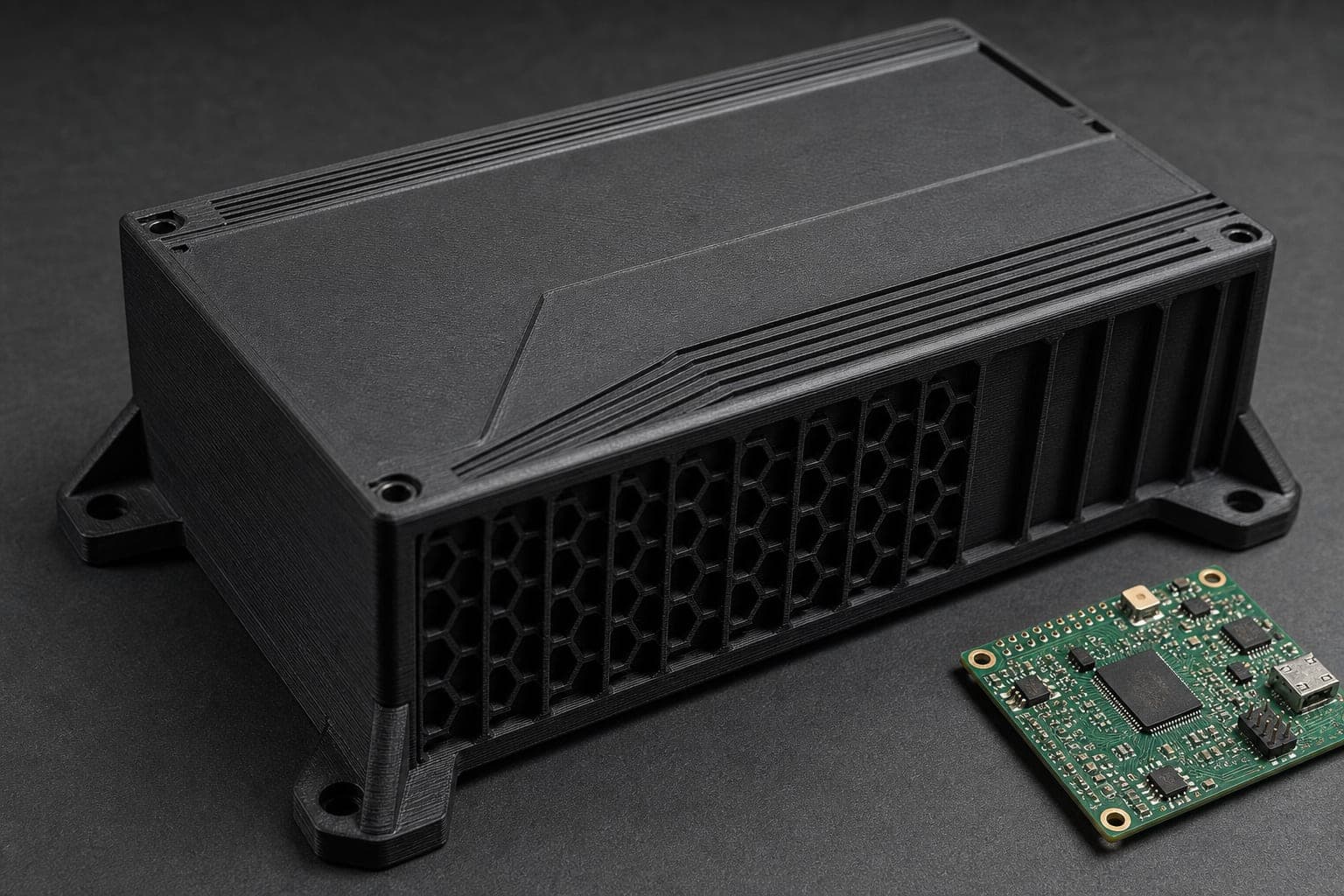
ESD-safe enclosures, RF-transparent housings, and vibration-isolated mounts for avionics, radar, sensors, and radiation-sensitive electronics across commercial, military, and space platforms.
Explore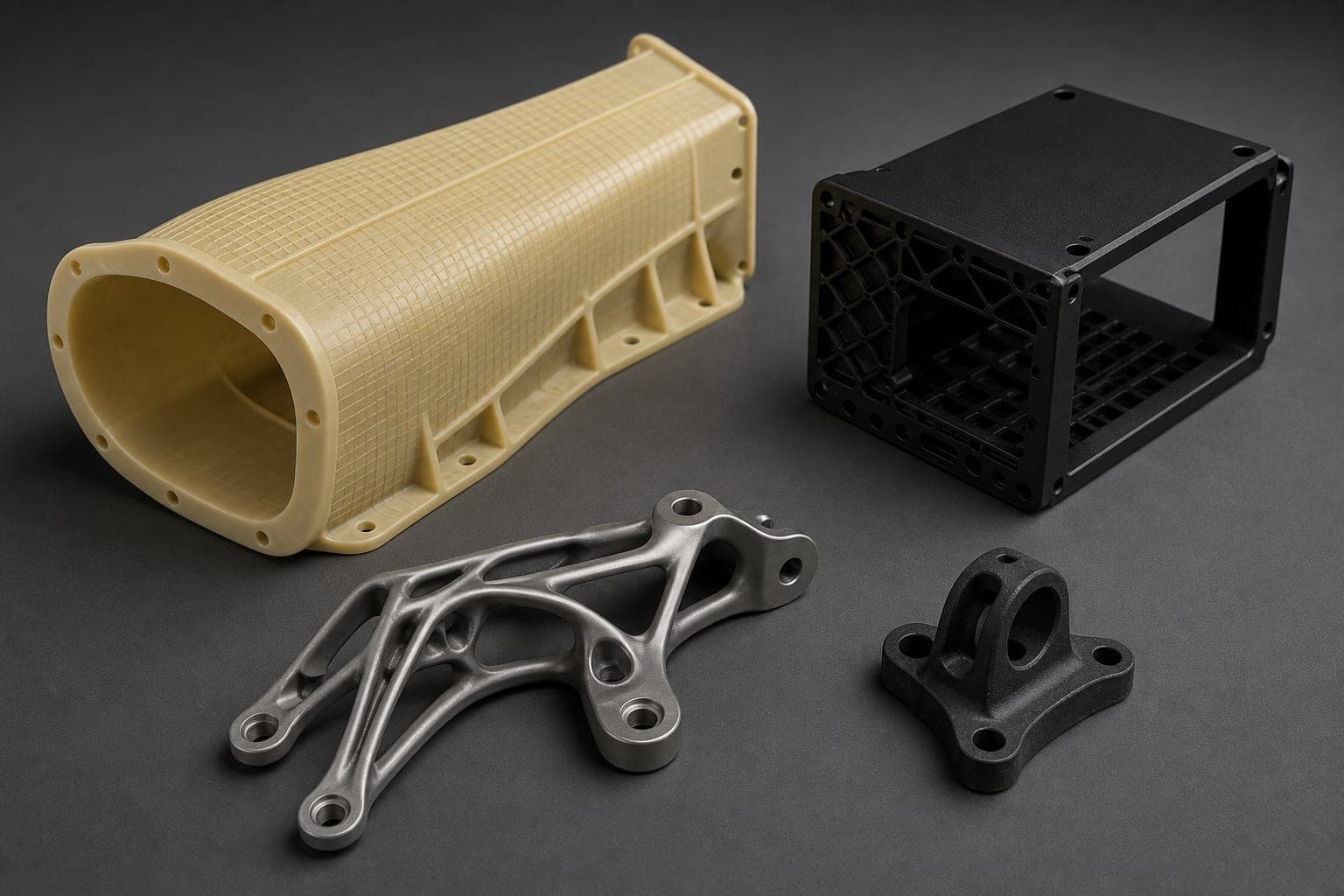
Pilot, bridge, and low-volume production, plus end-of-life replacement parts, printed on demand.
Explore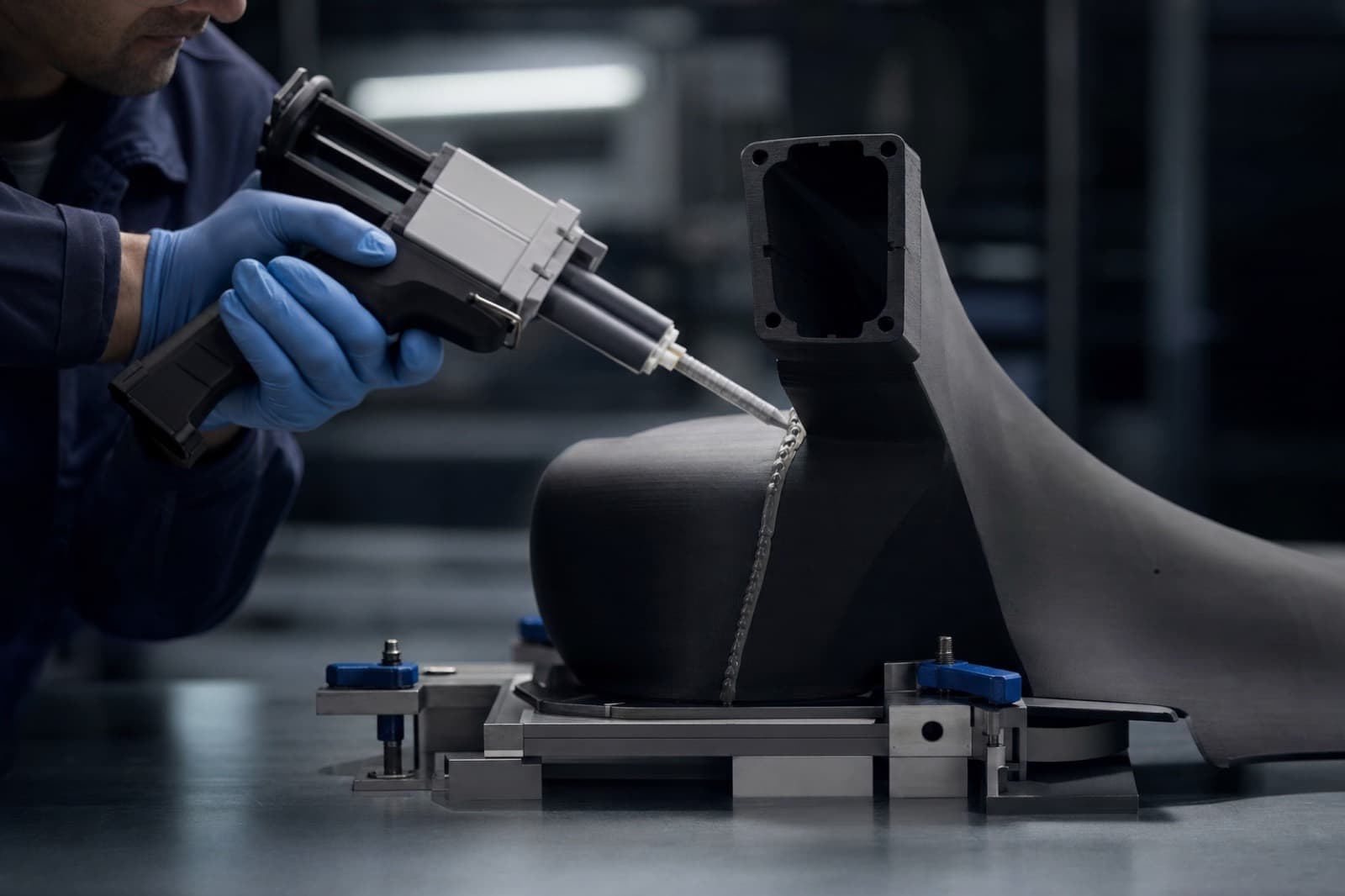
Aerospace-spec structural adhesives, weatherproof seals, and post-print porosity sealing, extending performance into demanding service environments.
ExploreValidated aerospace-grade materials.
The aerospace cabin standard: FAR 25.853 / OSU 65-65 compliant.
PEKK-based thermoplastic for avionics, low-outgassing space hardware, and high-chemical-resistance applications.
Carbon-nanotube reinforced PEKK with intrinsic ESD performance, engineered for mission-critical electronics.
Surface-resistivity controlled polymers for electronics, avionics, and radiation-sensitive hardware: no coating, no plating, no wear-through.
Other platform classes we serve.
Electric and hybrid-electric aircraft that fly the mission with onboard autonomy: cargo, resupply, heavy-lift, and persistent ISR.
Jet-powered, semi-autonomous uncrewed fighters teaming with crewed aircraft, built for affordable mass.
Low-cost uncrewed aircraft built in large numbers on a common core, with swappable wings, propulsion, and payloads.
Long-endurance, satellite-linked ISR and strike aircraft flown by pilots from ground stations.
Lightweight structures and payload housings for U.S. military UAS Group 2–5 platforms.
Building or upgrading a MALE aircraft?
Let’s build hardware.
Send us your drawings, your new mission fit, or your endurance problem. Our engineers will quote rapidly and deliver flight-ready parts built to last through the long sortie.